


Aeration for a Healthy Lawn
The Secret to Strong Roots and a Lush Summer Yard
Introduction
Spring is the perfect time to give your lawn the care it needs after a long winter. One of the most effective ways to ensure a healthy, resilient lawn is aeration. This simple yet powerful lawn care practice promotes deep root growth, improves nutrient absorption, and helps your grass thrive during hot summer months. In this article, we’ll break down everything you need to know about lawn aeration, including why it’s important, how it works, and tips for maximizing results.
What is Lawn Aeration?
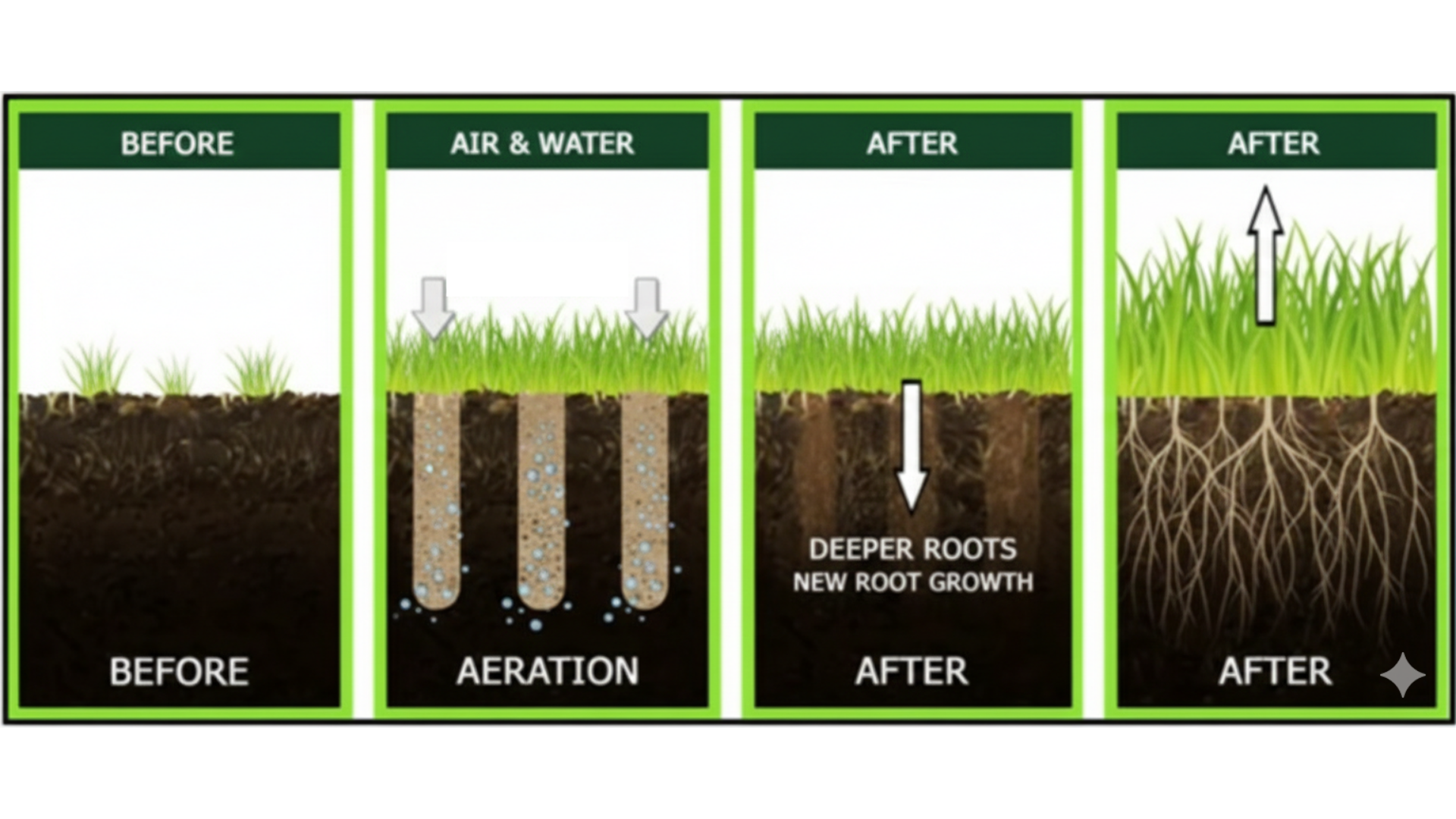
Lawn aeration is the process of removing small cores of soil and grass from your lawn using specialized equipment called aerators. Think of it as a workout for your turf—the process helps the soil “breathe” and creates an ideal environment for roots to grow deep and strong. Aeration is particularly effective in spring when soil moisture is high, making it easier for the aerator’s tines to penetrate and pull out plugs of soil.
Why Aerate Your Lawn in Spring?
Spring is an ideal time for aeration because it gives your grass a head start before summer heat arrives.
Here’s why aerating now is beneficial:
- Improved Water Absorption: Aeration helps water penetrate deep into the root zone instead of pooling on the surface.
- Enhanced Nutrient Delivery: Holes allow fertilizers and organic nutrients to reach roots more effectively.
- Stronger Roots: Deep root growth makes your lawn more resilient to drought and high temperatures.
- ReducedSoil Compaction: Regular aeration prevents hard soil, which can stunt grass growth.
What Happens to the Soil Plugs?
After aeration, you may notice small soil plugs scattered across your lawn. Don’t panic—they’re beneficial! These plugs slowly break down and add organic matter back into the soil, enriching it naturally. To speed up the process, mow your lawn shortly after aeration, which helps distribute nutrients into the root zone faster.
Fertilizing and Seeding After Aeration
Aeration is also the perfect time to fertilize or overseed your lawn. Fertilizers and grass seeds can penetrate deeper through the aeration holes, improving effectiveness. Consult with a professional landscaper to choose the right products and timing for your specific lawn type. They can also ensure proper application to prevent overfertilization or uneven growth.
Pro tip: Combining aeration with high-quality grass seed can dramatically improve lawn density and color.
Key Benefits of Annual Aeration
Regular spring aeration promotes:
- A healthy, thick lawn that resists weeds and pests
- Water conservation due to improved soil absorption
- Resistance to heat stress and drought conditions
- Improved nutrient cycling in the soil
Aerating your lawn each year is a simple, cost-effective maintenance practice that ensures your lawn looks its best through the hottest months.
Conclusion
If you want a lush, green, and resilient lawn, aeration is a must. By promoting deep root growth, improving nutrient absorption, and reducing soil compaction, aeration helps your lawn thrive while conserving water and reducing stress from heat. Spring is the ideal time to get started—so grab an aerator, or hire a professional, and give your lawn the boost it deserves