


How to Clear Any Driveway in Heavy,Wet Snow Using the Center Out Method
A Step-by-Step Strategy to Make Snow Removal Faster, Easier, and Stress-Free
Introduction
Clearing a driveway in heavy, wet snow can feel like wrestling the job rather than completing it. The chute clogs, snow stops moving, and frustration quickly sets in. Many people assume the snow itself is the problem, but in reality, the technique you use is the main factor that determines whether the job is smooth or a struggle. The center out method is a proven approach that keeps your driveway clean, prevents clogging, and allows you to finish efficiently without unnecessary effort.
WhyMostPeople Struggle with Snowblowing
Most homeowners or operators fail not because they can’t handle the snow, but because they use a back-and-forth approach that creates extra work. Snow gets thrown into areas that still need clearing, and machines are forced to push through dense, packed snow repeatedly. In heavy, wet snow, the problems are compounded. The snow is sticky and dense, which reduces the throwing distance and creates an overwhelming load on the machine. Pushing harder does not solve the problem; it only increases stress and rework.
The Center Out Method Explained
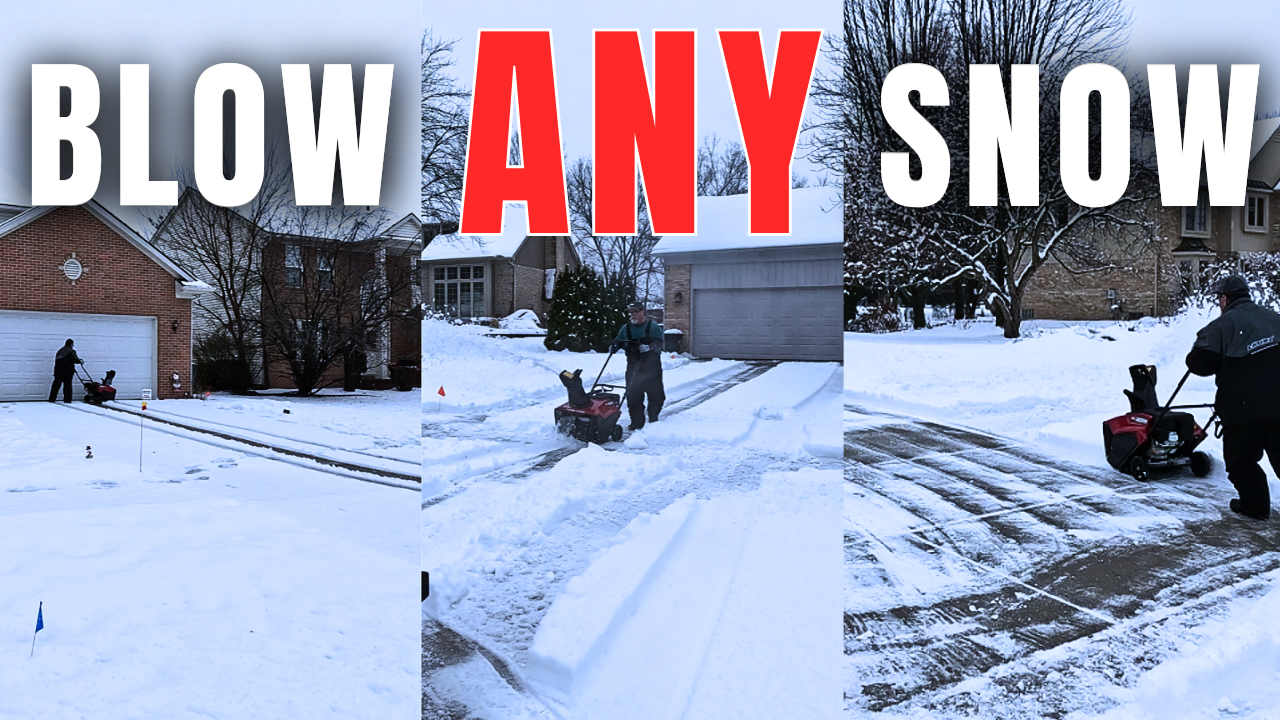
The center out method begins with a straight cut down the middle of the driveway. This first pass is critical, as it establishes a clean workspace from which all other passes will expand. The key is to throw snow only onto areas that have not yet been cleared, never onto already cleared sections. By working outward in a continuous loop, you avoid doubling your effort, keep snow moving through the machine consistently, and maintain control over the job. As the cleared area expands, the remaining snow is easier to manage. The technique emphasizes flow over brute force, encouraging steady movement and measured passes. This approach also works with a wide range of snowblowers, including the standard models most homeowners own. Speed is controlled not by walking faster but by keeping snow moving steadily through the machine. If the blower starts bogging down, it is a signal to reduce feed, not to push harder.
Watch a step-by-step demonstration of this method here: https://youtu.be/a_SRHmsfYI4
Tips for Handling Heavy, Wet Snow
Wet snow creates unique challenges because of its weight and density. Overloading the snowblower leads to clogs, while poor technique can turn a manageable driveway into a time consuming nightmare. Maintaining the proper pace and keeping the chute moving without changing direction unnecessarily is critical. Non-stick sprays or wax can reduce minor clogging issues, but technique remains the most important factor. For larger or professional jobs, a two person approach can be used, where one operator runs the snowblower and a second addresses edges, steps, and tight areas to ensure a crisp finish.
Phase One: The First Pass
The initial pass down the center of the driveway creates the foundation for the entire job. It is essential to choose a side for snow placement and aim it deep into the yard, avoiding the creation of walls that must be managed later. This phase is about building a clean workspace rather than brute forcing through snow. Proper execution here sets up the flow for all subsequent passes and minimizes rework.
Phase Two: Expanding the Loop
After the center line is established, subsequent passes should expand outward in a smooth clockwise loop. Maintaining the chute in the same direction while throwing snow onto uncleared areas prevents overlap and reduces wasted effort. This method ensures continuous progress, even in conditions where heavy, wet snow would normally impede efficiency. By systematically working from the center outward, each pass naturally makes the remaining snow more manageable. Finishing Like a Professional The center out method not only improves efficiency but also allows for professional-grade results. Partial passes become easier as the cleared space grows, and detail work can be completed simultaneously while the snowblower continues moving. For exceptionally deep snow or compacted plow piles, adjustments may be necessary, but the principles remain the same: control the feed rate, keep snow moving, and avoid double work. Following this approach ensures that the driveway is cleared cleanly, quickly, and without unnecessary stress.
Conclusion
Strategy is more important than brute force when it comes to clearing snow. Using the center out method allows homeowners and operators to work from the middle outward, maintain consistent movement, and throw snow only onto areas that have not yet been cleared. This method saves time, prevents clogging, and produces a clean, professional-looking driveway. The key takeaway is clear: controlling the flow and following a structured approach turns even heavy, wet snow into a manageable task.